Just when I think that I’m getting used to the shiny new world of Roombas, Alexas and driverless cars, something else comes along and throws me off. Last week it was robot bartenders. I didn’t see them in person but rather heard about them in an ad for Royal Caribbean Cruise Lines. My first thought was: I wonder if they will tell jokes, play therapist to my sorrows, and keep order in the saloon the way that human bartenders do. My second thought was: do I have to tip a robot?
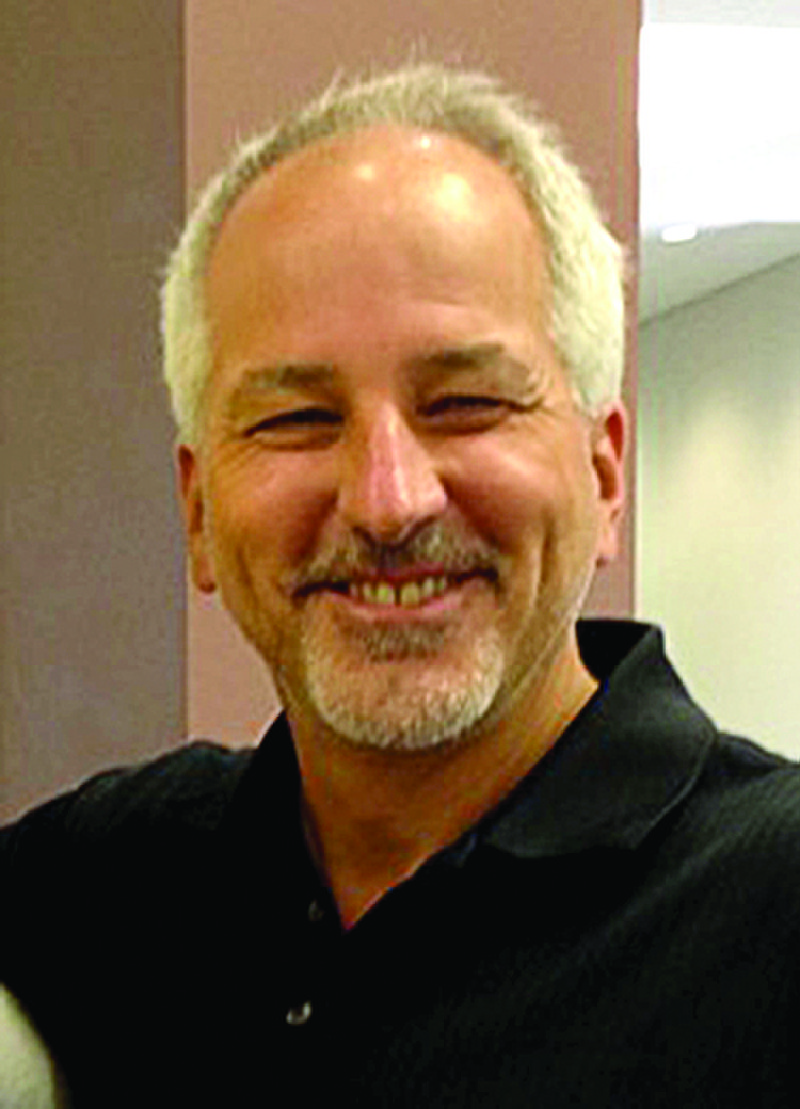
Del Doughty is Dean of the College of Arts, Sciences and Education, and professor of English at Texas A&M University-Texarkana.
If the trend catches on, bartending will be the next occupation to be displaced by automation. Insofar as bartending is blue-collar work, this is not headline news. What is more eyebrow-raising is the prediction, made by Beltway economists and Silicon Valley types, that the Industrial Revolution 4.0 is coming for white-collar workers.
In one recent study published by the National Academy of Sciences, a team of international researchers remarked on the potential of artificial intelligence to disrupt a variety of jobs in fields as diverse as finance, information technology, law and medicine, and in a 2017 article, one scholar estimated that up to 47% of the U.S workforce is subject to obsolescence or “technological unemployment.” To be sure, critics take issue with these studies, quibbling with the methodologies and dismissing the conclusions as sensational and alarmist, but that doesn’t keep the rest of us from feeling nervous about being put out of work when we walk into our favorite neighborhood bar and see Optimus Prime standing behind the counter.
What will we do with ourselves if we don’t have much to do? People may hate Mondays and complain about putting in 60-hour weeks, but the truth is, work provides us with structure and meaning. Without work, most of us would feel without direction. “Siri, what am I supposed to do with myself today?” is a terrifying question.
In higher education, we’ve been pondering these questions well before Amazon’s drones began delivering packages to our doorsteps.
Going way back in academic history, Aristotle wondered what was unique about humans and inquired about what it means to live a good human life. Those questions have rung through the ages and seem as relevant today as ever. One of the leading contemporary thinkers is Joseph Aoun, the president of Northeastern University in Boston and author of “Robot-Proof.: Higher Education the Age of Artificial Intelligence” (MIT Press, 2017). Aoun is reasonably optimistic about artificial intelligence and machine learning. He envisions a future with more robots and algorithms, but also one that finds not so much competition but cooperation between humans and robots. Don’t think of HAL in 2001, he would say; think of Luke Skywalker and R2-D2.
If that’s the future, how will colleges and universities shift their curriculum in response? Aoun thinks students will need to become fluent in the “new” literacies of tech and data. That is, students will need to know some coding and to understand the principles of computational logic. They’ll also need to equip themselves to think about the deluge of numbers and facts churned out by Big Data. But they will also need to attain fluency in “older” literacies, like the humanities. That may seem counterintuitive at first — why read Shakespeare in a world where people are sharing dramas on Instagram and Tik Tok? — but the humanities help us to become more fully human. Let computers do the things that computers are good at, Aoun says, and let humans do the things that we are good at. In other words, maybe we can let robots shake and stir our cocktails, but we will be the ones to dream up the recipes.
Aoun is also a proponent of experiential learning, which is to say, of internships, study abroad trips and service learning. These kinds of hands-on, out-in-the-world approaches to education provide students long-form multilayered assignments beyond the classroom and shape learners into creative, entrepreneurial humans who will, in their human-ness, discover how to transform community needs into lucrative business ventures and how to collaborate with others to turn abstract concepts — say, social justice — into flourishing non-profits.
If you’re a young person who’s worried about your future in a robotic world, perhaps the best thing you can do is become what Aoun calls a “self-directed lifelong learner.” First, become the kind of person who doesn’t wait for her teacher to tell her what’s on the test and what score she needs to pass. Instead, get curious. Develop your own learning agenda and set your own standards. And second, don’t stop doing that. Understand that your diploma is never going to be enough. To remain viable, you will need to “upskill” on regular basis.
Got your finance degree from a prestigious school? Great. Now go learn Mandarin, and how to visualize data, and how to provide mental health first-aid. If you can become a self-directed lifelong learner, chances are that you’ll do OK in the brave new world. (That’s Shakespeare, by the way.)
(Del Doughty is Dean of the College of Arts, Sciences and Education, and professor of English at Texas A&M University-Texarkana. His views are not necessarily those of the institution.)